

This week, the S&P 500 notched its longest winning streak since April-May of last year.
All while the Strait of Hormuz remained closed, oil traded north of $90 a barrel and bond yields across the globe hovered near multi-year highs.
A truly fascinating (and occasionally hilarious) environment to trade.
While the macro crowd has spent the last few weeks either sitting on their hands or embarrassing themselves on X, technical traders have been doing what they do best: buying strength, respecting the trend and riding moving averages higher as stocks continue to climb the wall of worry.
Personally, it’s been one of my strongest quarters to date.
After successfully playing the April bounce and correctly calling the great renaiSAASance in May, my focus for June remains refreshingly simple: stick to the process, stay aligned with the tape and continue making money.
For those of you that signed-up for the paid tier, the live trading room enjoyed another fruitful month. Based on just one contract per trade, total profits for the month totaled $1,260, giving us a running total for Q2 of $6,020.
If this reads a little like a victory lap, so be it.
Markets like the one we’re trading right now don’t come around every day. And when opportunity presents itself and you’ve got the conviction and discipline to act on it, I think it’s important to acknowledge that.
That said, the market doesn’t care what happened yesterday. The only question that matters now is whether the conditions that got us here remain intact.
Is Breadth Deteriorating?
One development that caught my attention this week was the deterioration in market breadth.
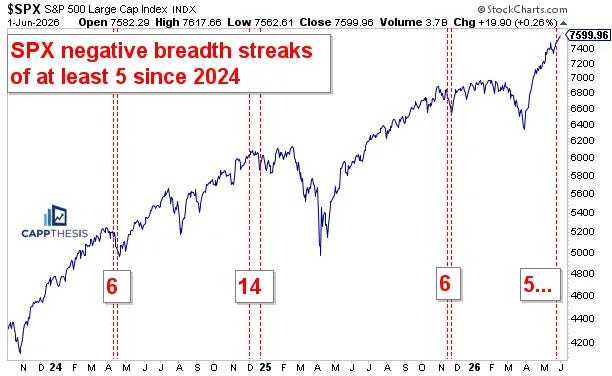
Over the last five trading sessions, the S&P 500 has recorded negative breadth every single day. In other words, the index continues to grind higher, but fewer stocks are helping to do the heavy lifting.
Since the start of 2024, we’ve seen only three other instances where negative breadth persisted for five or more consecutive sessions. Each eventually stretched to at least six days, including an unusually long 14-day streak in late 2024.
How did the S&P 500 perform after these instances - shout out to Frank Cappelleri for the chart.
There’s also a noticeable divergence in play between the S&P 500 notching ATHs whilst the percentage of stocks trading above the 20, 50 and 200dma remains pinned below the highs set in April.
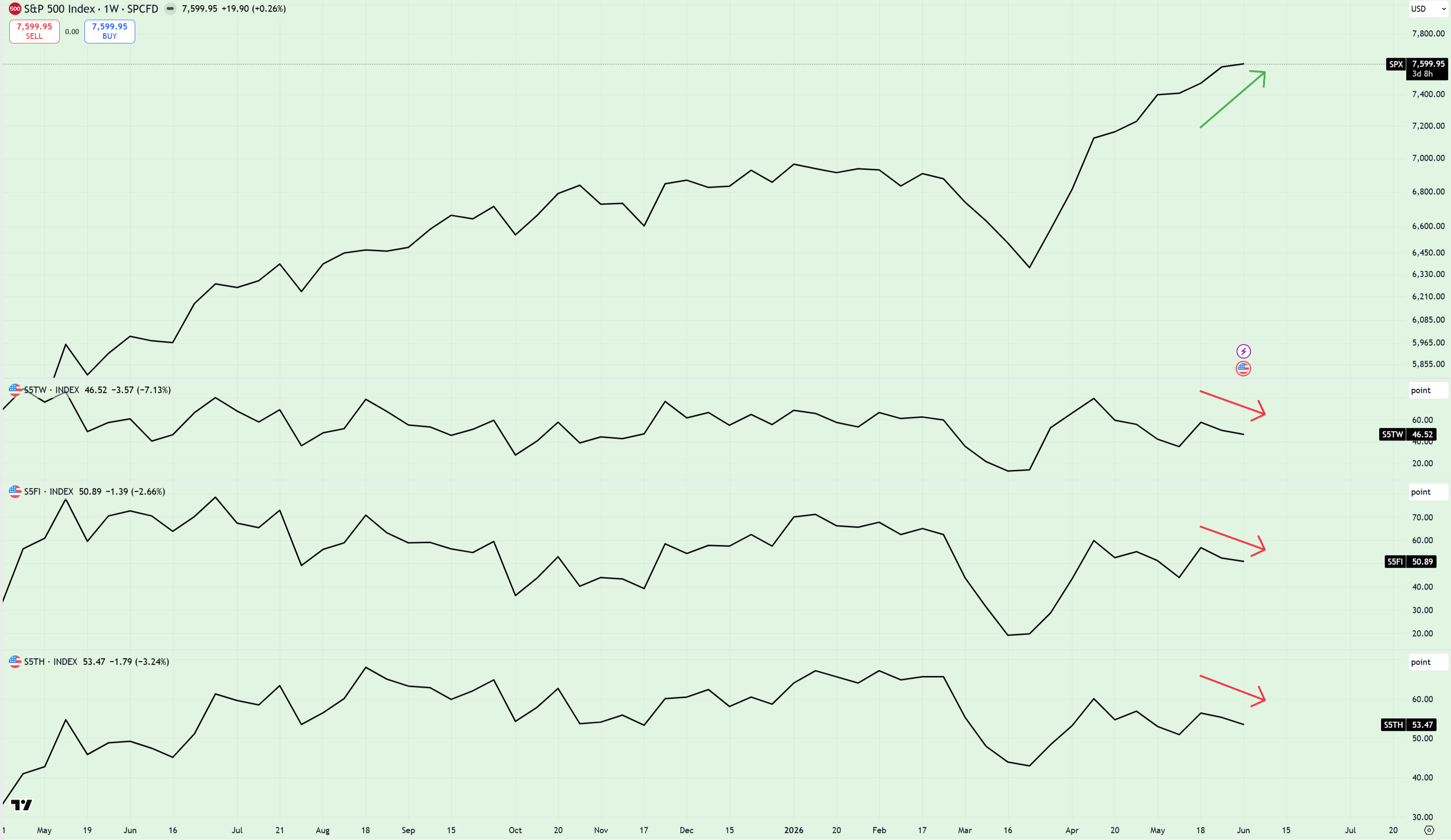
For now, I think the sensible approach is to treat these breadth metrics as a yellow flag rather than a red one.
Breadth measures like these are incredibly useful for understanding what’s happening beneath the surface, but they rarely pay to be viewed in isolation. As long as the major indices remain above key moving averages and leadership groups continue to hold their uptrends, the weight of the evidence still favours the bulls.
Could these divergences eventually matter? Absolutely.
But history suggests that markets can remain narrow for longer than many expect. Until price starts confirming the weakness, I’m inclined to give stocks the benefit of the doubt and allow time for participation to catch up with the advance.
Which brings us to the more important question: where does the opportunity lie from here?
Where I’m fishing for the next trade
With software now catching a meaningful bid and a number of names in the long-term portfolio continuing to cook, I’m reluctant to spend too much time retreading old ground.
Instead, I’d much rather focus my attention on areas of the market that looked primed for a new impulsive leg higher - and right now, that focus is squarely on financials and communications.
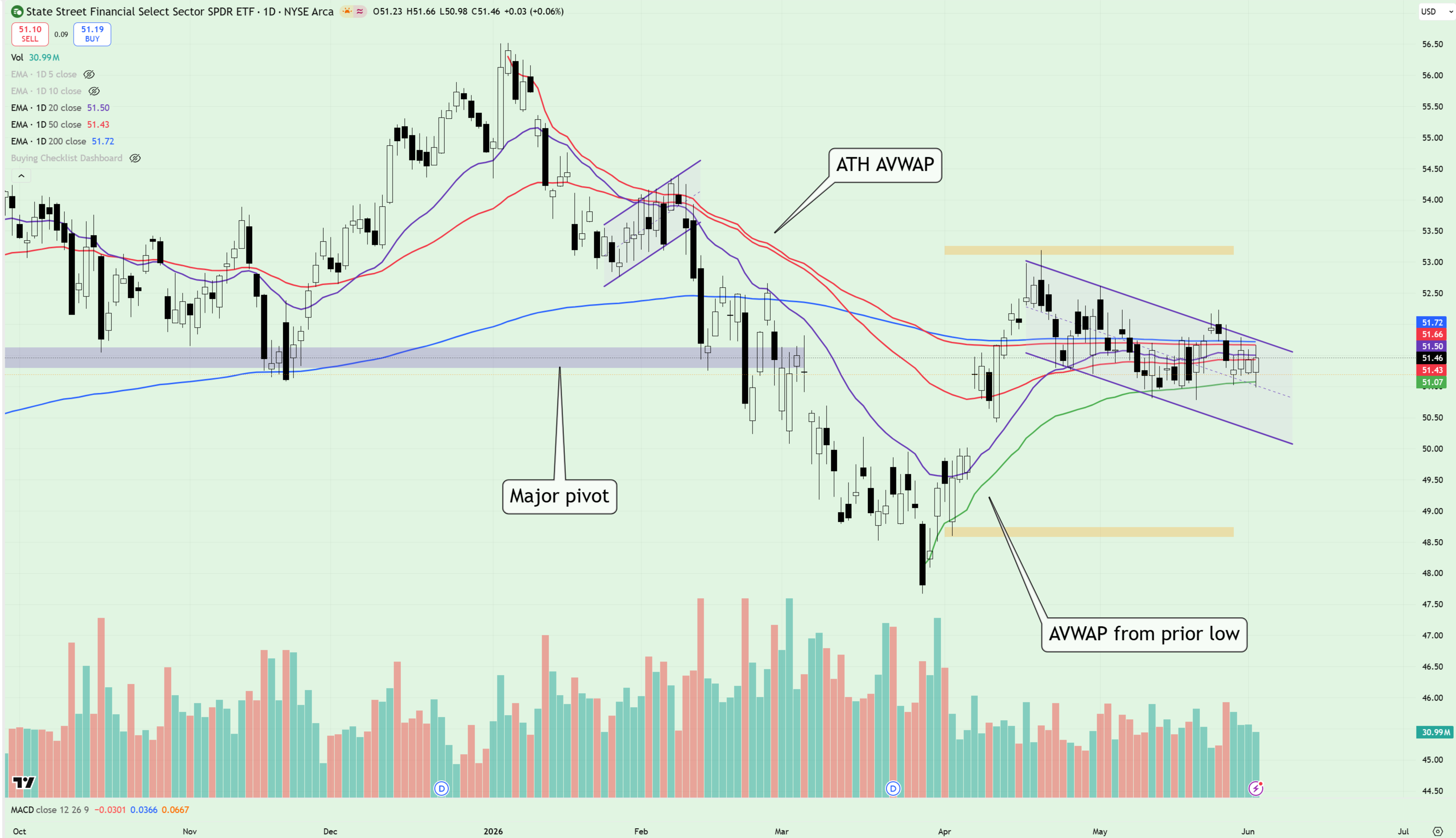
Whilst my JPM calls were likely premature, I’m happy holding them so long as XLF holds this bullish flag pattern (specifically above the AVWAP front he prior lows). Confidence grows above the 200DEMA shown in blue, with a breakout ahead of next month’s earnings season providing a great opportunity in some of the space’s more unloved names (hence, JPM calls).
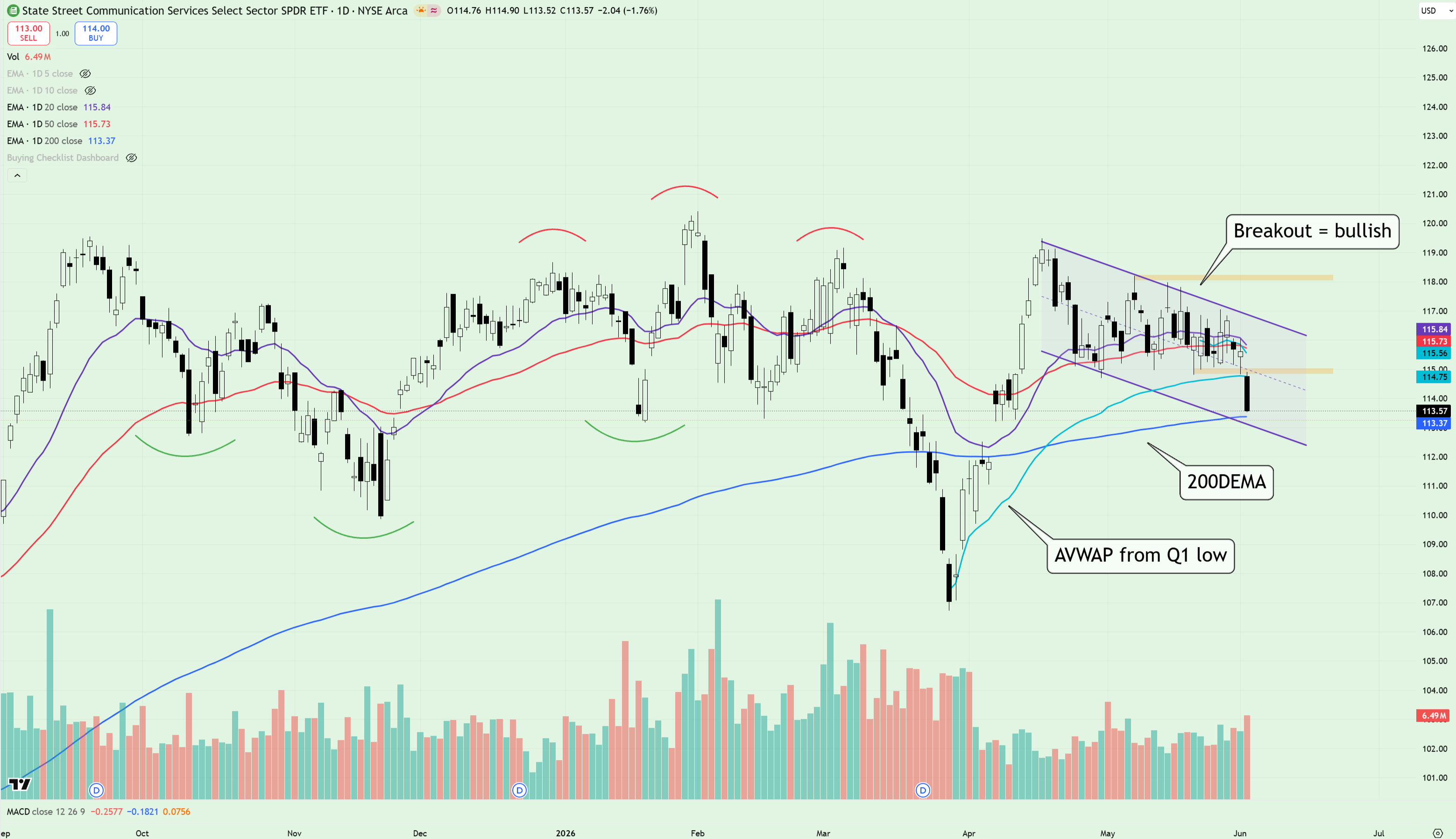
As far as XLC goes, it’s an eerily similar setup - with one clear caveat. Weightings.
Specifically, META - which currently boasts the largest weighting in XLC at 23%. If META catches a bid above the AVWAP from the prior low at 615, I’d be reluctant to bet against XLC breaking higher from the flag shown below.
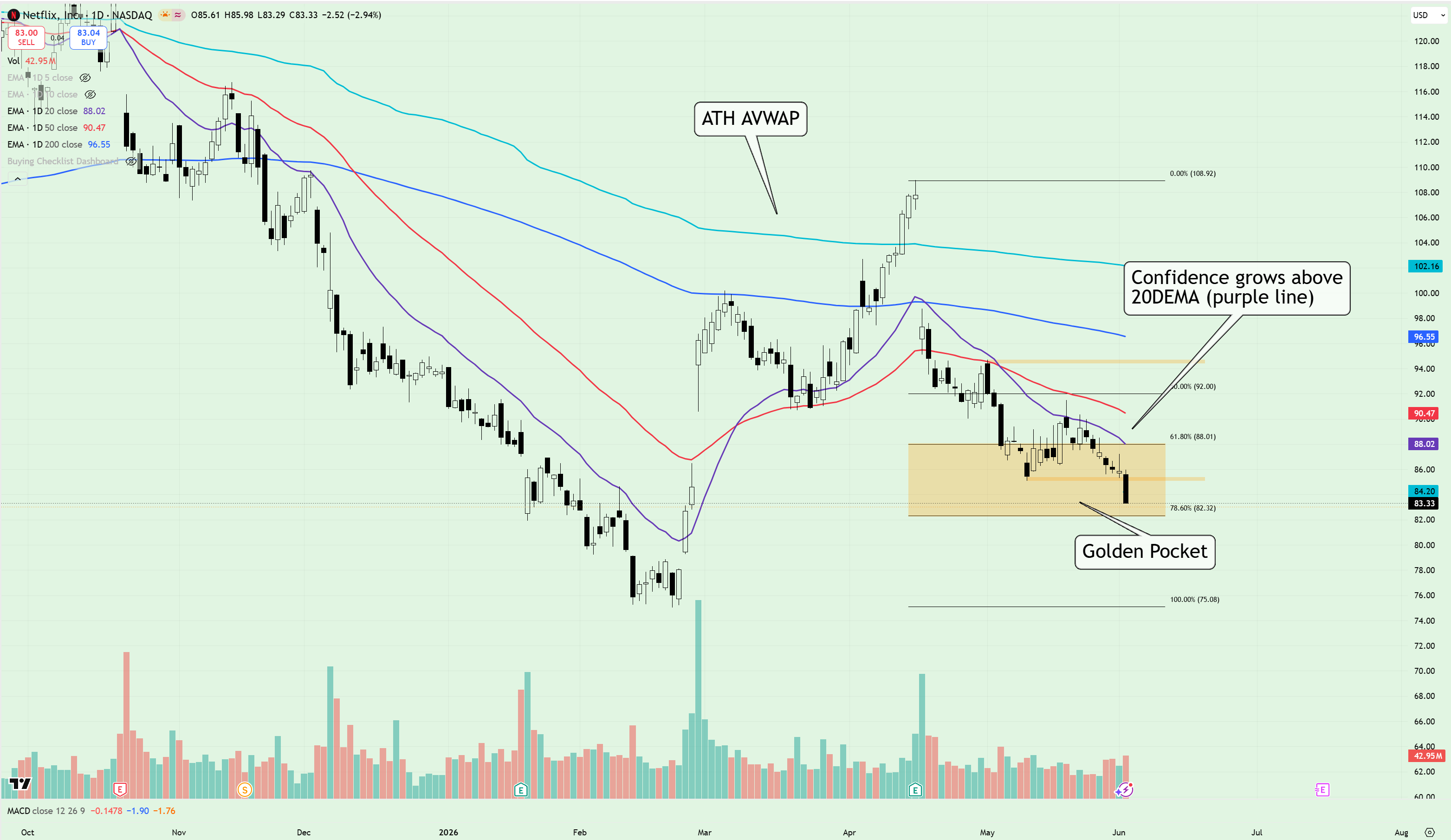
If XLC does start to move, one ticker to keep an eye on is NFLX - which currently finds itself at an interesting level having given back a lot of the gains made earlier this year.
Don’t forget the leaders
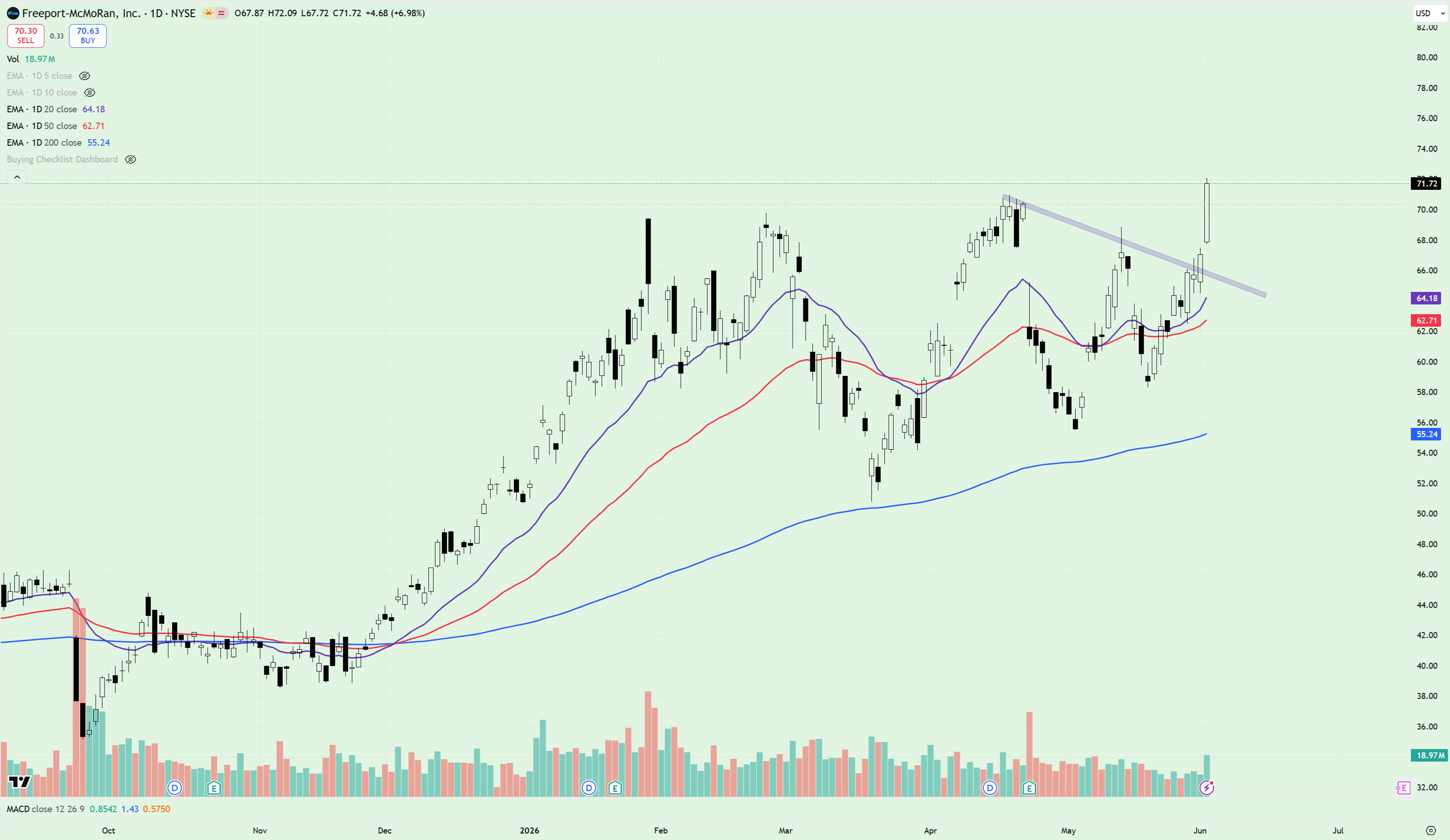
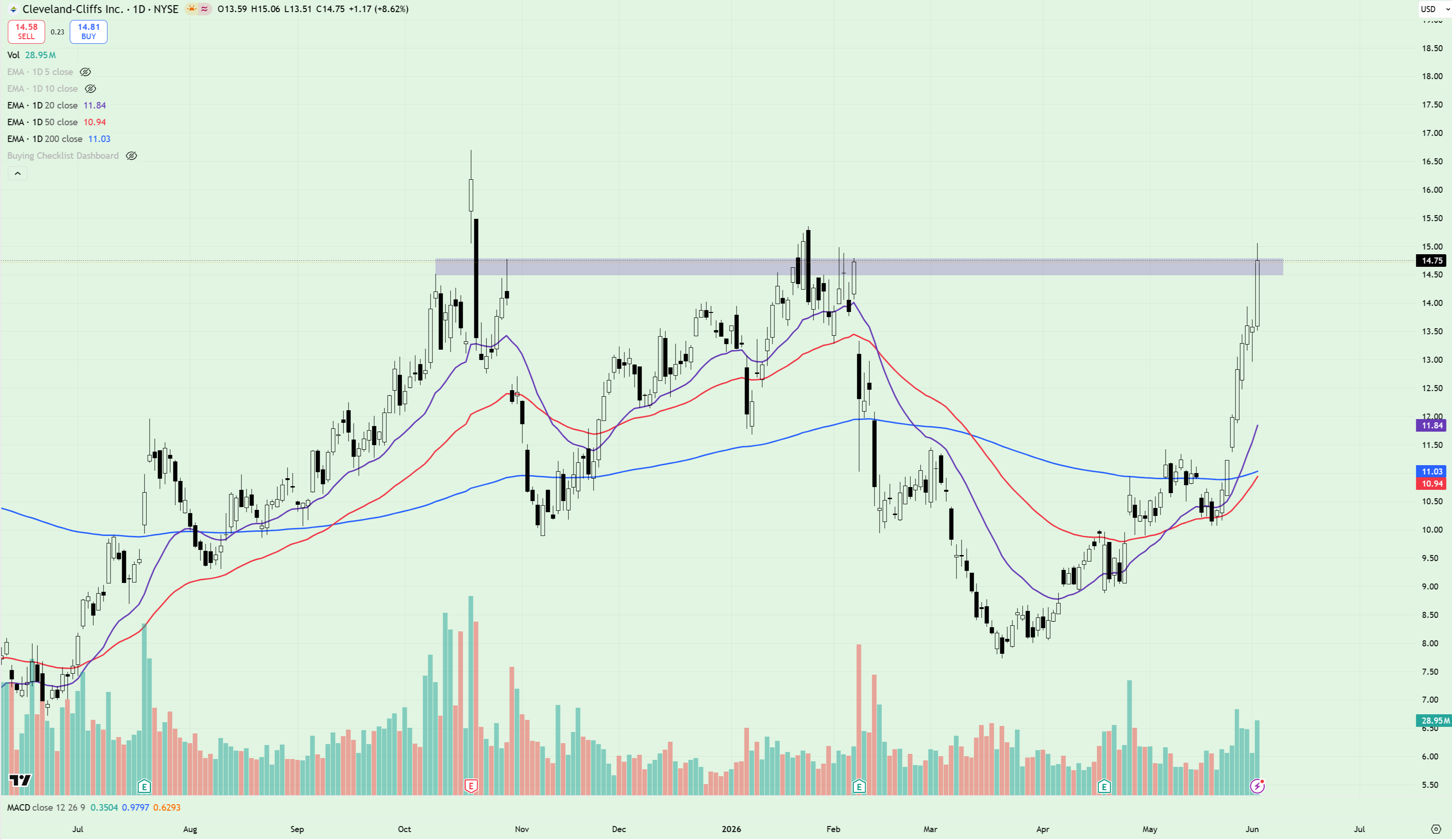
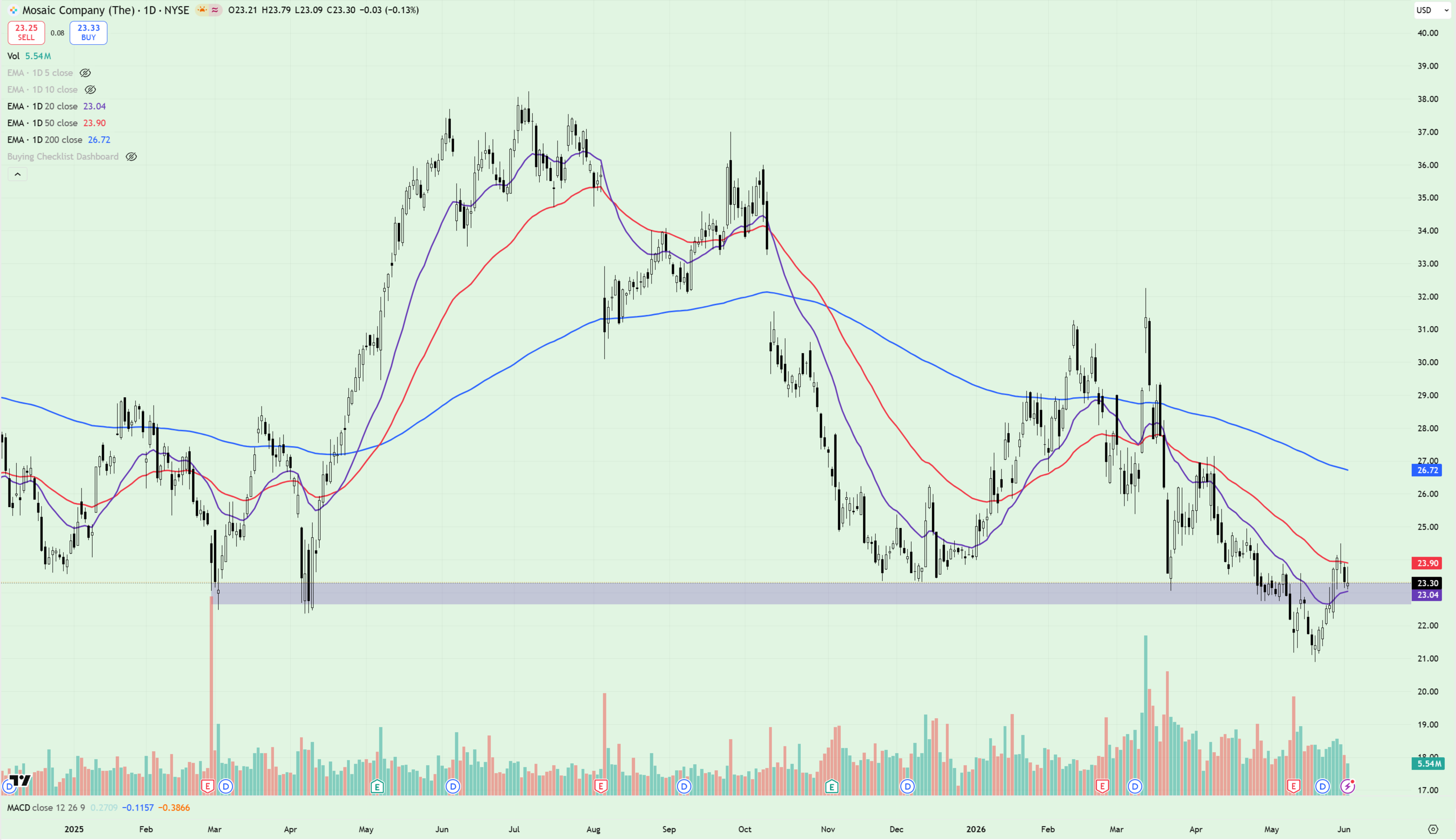
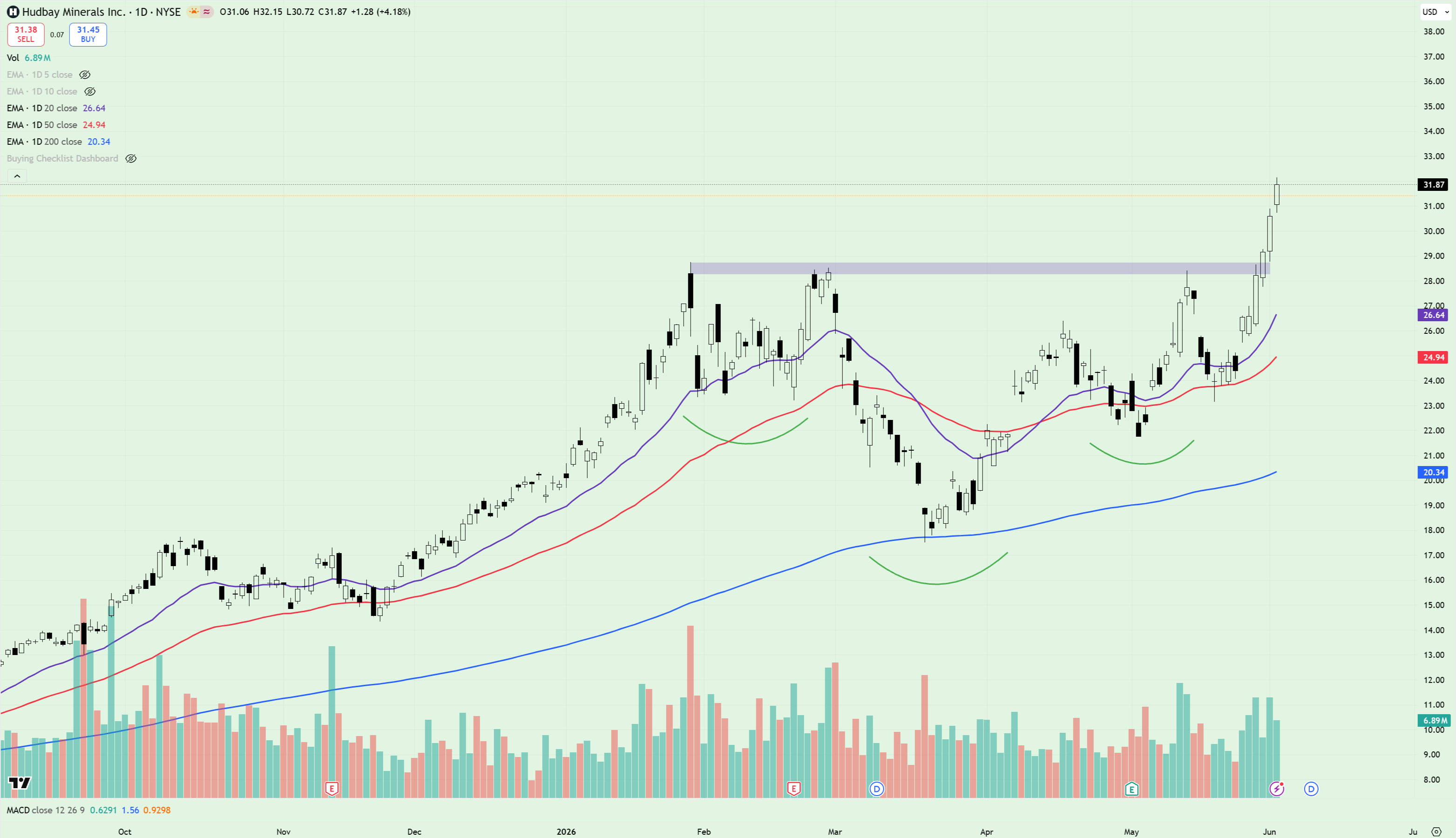
While I love fishing in underappreciated waters, it’s important to recognise the areas of the market that continue to work away in the background. Yes, this includes SMH - but also pockets of the market exposed to base and industrial metals, as well as other inflation-sensitive sectors such as fertilisers.
A few tickers worth looking at this space
FCX
CLF
MOS
HBM
And lastly, a place where NOBODY is looking
Maybe I’m still feeling a little too pleased with myself after the software call, but I can’t help looking for other corners of the market that may have fallen victim to similarly flawed narratives.
Which brings me to sports betting.
More specifically, I quite like the look of FLUT and DKNG at current levels. Here’s the latter’s chart:
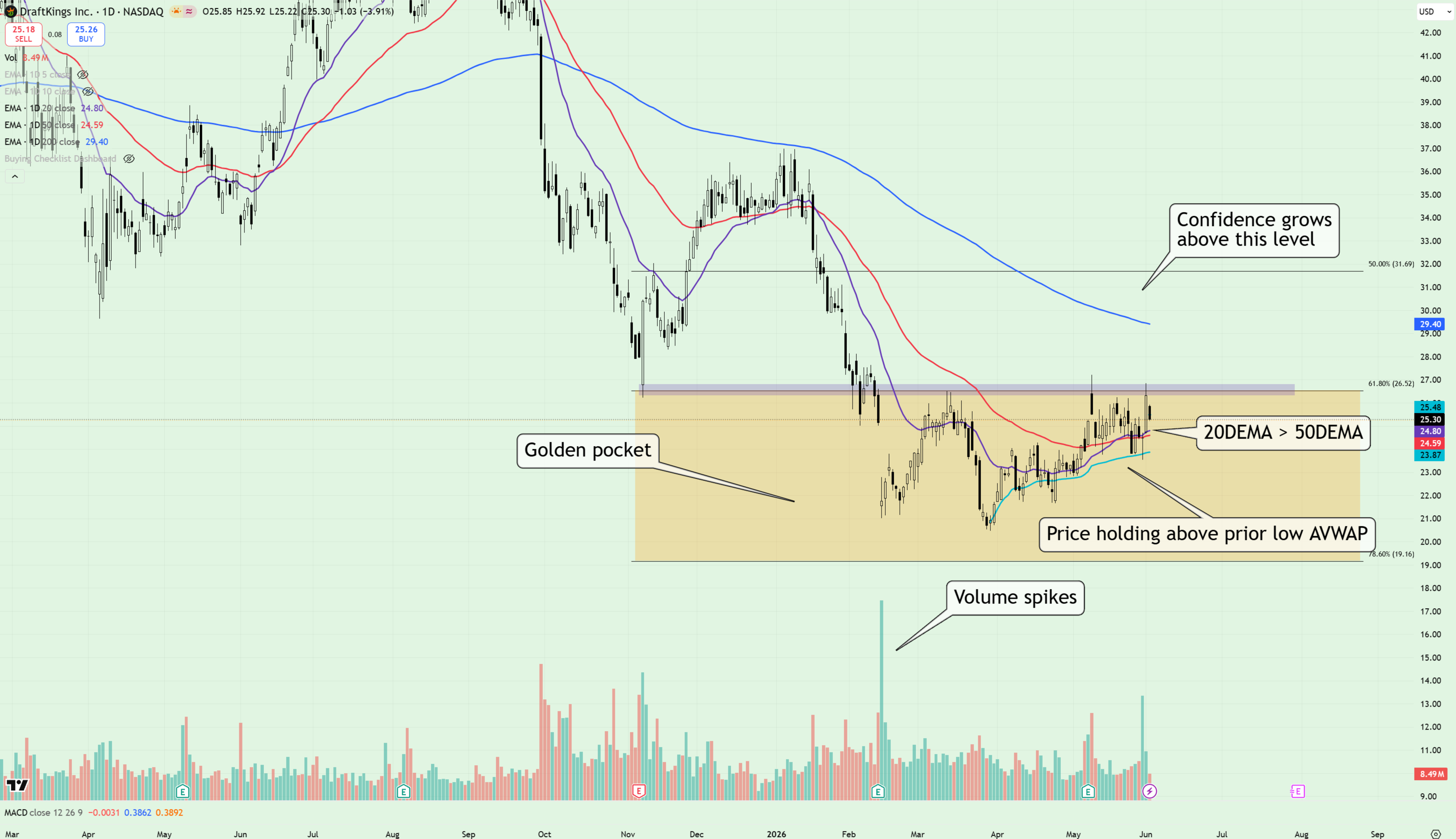
The prevailing view seems to be that prediction markets are about to eat their lunch. Maybe. But that strikes me as one of those stories that sounds far more compelling on social media than it does in the real world.
Yes, prediction markets have grown at a remarkable pace, and yes, they’ve undoubtedly stolen some mindshare from traditional sportsbooks. But investors seem to have jumped straight from “interesting new competitor” to “existential threat” in record time.
Meanwhile, DraftKings just delivered 17% year-over-year revenue growth, generated record quarterly EBITDA, and noted that prediction markets have had only a negligible impact on sportsbook revenue thus far.
Consumer activity on its own predictions platform is growing rapidly, and management appears more interested in joining the trend than fighting it.
Flutter’s situation looks similar.
Despite all the handwringing, FanDuel remains the dominant player in U.S. sports betting, and management continues to describe the impact from prediction markets as minimal. In fact, they’re investing heavily in their own prediction market offerings rather than retreating from the space.
The market appears to be pricing these businesses as though prediction markets are about to replace sportsbooks altogether. The reality may be far less dramatic. Most bettors aren’t looking to become traders. They want parlays, same-game multis, boosts, loyalty rewards, slick apps and a familiar betting experience. Prediction markets may grow the pie rather than simply steal it.
Could Kalshi and others take share? Of course. But there’s a world of difference between “competition is increasing” and “the investment case is broken.”
As things stand, the market seems convinced of the latter. I’m not so sure.
Closing thoughts
As we head into the second half of the year, my biggest takeaway remains unchanged: this is a market that continues to reward conviction.
Not recklessness. Not blind optimism. Conviction.
After all, the S&P 500 has spent the last few weeks grinding higher despite a closed Strait of Hormuz, oil north of $90, and bond yields hovering near multi-year highs. In almost any other environment, those would be considered meaningful headwinds. Yet here we are.
That’s not an argument for ignoring risk. It’s simply an acknowledgement of what price is telling us.
If stocks can continue climbing the wall of worry with all of those concerns hanging over the market, it’s worth asking how much further they might travel should some of those fears begin to fade. And in that context, SPX 8000 doesn’t sound too wild.
Maybe that’s the optimist in me talking.
But optimism, backed by a disciplined process and a willingness to follow the tape, has paid remarkably well throughout Q2. Until the market gives me a compelling reason to think otherwise, I’m inclined to keep giving it the benefit of the doubt.
5 restracks and 5 likes and I’ll make the paid trading chat free for the month.
Best,
Al
Disclaimer: This content is for informational and educational purposes only and should not be construed as financial advice. I am not your financial adviser. Always conduct your own research, consider your personal circumstances, and consult a qualified professional before making any investment decisions.