

Before I embark on the journey of starting a Substack, my ambition to is to document one clear message: honesty.
In the months preceding this moment, I traded under a pseudonym. Bob Kazamakis. A goofy name ripped from a comedy show, hidden behind an AI-generated profile picture. I won’t bore you with my excuses for taking this approach.
All you need to know is that Bob is dead. Long live Bob.
My name - my real name - is Alex. I’m a 35 year old trader based in the UK. I have a wife, child and dog, a bald head and a face weathered beyond my years.
I haven’t been trading full time for very long and the exact moment I became obsessed with charts is difficult to place. Somewhere between Autumn 2022 and the regional banking crisis of 2023 would be my best guess.
So no, I’ve not experienced a dot-com bust or a great financial crisis - not as a trader, anyway.
But what I have done is attempted to learn as much as I can about charting and, perhaps more importantly, the psychological tweaks needed to succeed in the markets.
I’m enrolled for the CMT Level I exam in December and aim to achieve full ‘minted’ status by the end of 2027. Maybe that will legitimize this trading venture in the eyes of my peers, maybe not. But who cares, really, either way? I’m here to make money.
Why Trading?
Dating back to 2018 my primary source of income has centered around cameras.
I was a photographer, videographer and more recently, production company founder - having started a small agency with my wife in 2023.
That business continues to operate today and we’re having our strongest year since starting out. My wife runs the production company now I’m stepping into trading full time, and we have a team of freelancers we can rely on for the more time-consuming elements of our work (editing, namely).
If it sounds good, it’s because for the most part it is.
We’re incredibly lucky to choose our hours and manage our time - priceless, since becoming parents in January last year.
But making money ‘the old fashioned way’ has become increasingly difficult, especially in the aftermath of 2020.
Long hours. Sleepless nights. Thousands of hours wasted behind the wheel of a pickup truck.
And that’s before considering the financial side of running a business - VAT (the UK threshold for paying VAT hasn’t shifted since 2012), income tax (brackets have remained frozen despite inflation) and corporation tax (the tax paid by the business for doing its job - making money).
Trading offers an alternative. It’s something I thoroughly enjoy and take great pleasure from - even during drawdowns and losing streaks.
Done properly, it offers the potential to provide a salary for myself whilst simultaneously reducing some - not all - of the strain on our film company. It facilitates more time spent at home and the hope of a brighter future - something that has faded as a business owner during the last five years.
The Story So Far
Like most aspiring traders, I’ve learnt a number of key lessons since starting out. Before we get into those lessons, here’s a whistle-stop tour of the last couple of years:
I placed my first trade - a short position - on the US500 on eToro during the regional banking crisis and netted approx $500 within a few hours.
Winning straight off the bat, I figured trading was a sure-fire way to become a millionaire. The $500 was soon lost and I proceeded to blow out my modest account within a few weeks.
I reset, watched some YouTube videos and started again. The result was the same - a few wins, followed by some devastating losses. Account back to $0.
Filtering money from my salary into my eToro account, I continued to lose more than I made and decided to step away, having experimented with every setup, every indicator and every theory banded around on X at the time.
Still hooked, despite the losses, I bought some books. Elliott Wave, VWAPs and Fibonacci levels became my obsession. I dipped back into the market and continued to lose.
I established a Substack once I thought I’d ‘figured it out’ and accrued 50 followers in a few months. Despite making some good calls, I often closed winners too early and allowed losers to roll too long.
It took time and patience, but decided to scale back and simplify my process - focusing more on myself than the markets. Things began to click from then.
My charts began to reflect my ‘simplified’ approach - focusing solely on the trend, key Fibonacci levels and volume.
Winners became more frequent and losers were closed at set levels, pre-determined before the trade was made.
I learnt that trading between 1-3% of my portfolio’s total equity facilitated better sleep, better balance and less emotional baggage.
I opened an options trading account and made 20% in my first two months.
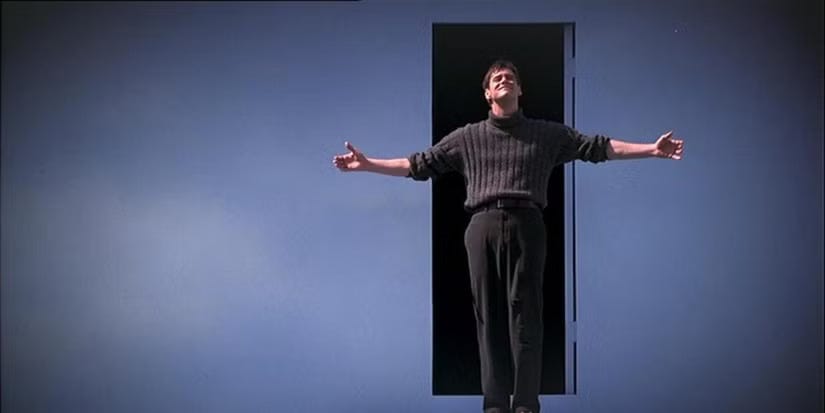
I killed Bob and started again. Because that’s the beauty of trading - even when you’re wrong, there’s always a new opportunity waiting to right the ship - provided you trade the right way, that is.
Trading the Right Way
Every trader has their own approach, something that works uniquely to them. For me, my approach boils down to a few simple rules:
The markets doesn’t care what you think. Bold macro claims, front-running data prints and the market’s potential reaction to said prints, long term projections and trends - they’re a fool’s errand. The charts will tell you what’s actually happening in the market at any given time. Leave the top callers and knife catchers to do their own thing. They lose way more than they win.
Trading within set limits. A great way to blow up an account is to size up prematurely. Believe me, I’ve done it enough times and learned this lesson the hard way. Stick to trading 1-3% of your portfolio’s worth at a time. Enjoy the wins when they come and let them roll. Scale in if it works and bail out if it doesn’t. Set yourself a line in the sand on each trade before you enter and don’t beat yourself up for getting it wrong. It happens - despite what you read on X.
Find your happy place. If a certain indicator, setup or indicator works for you, then run with it. Experiment and don’t be afraid to swing the bat. Every trader is different, and what works for one might not work for the other. But isn’t that beautiful? Isn’t that what makes life so interesting? The charts are the canvas and the tools at your disposal - whether it’s Elliott Wave theory, fibonacci levels etc. - are your paint. Have fun with it.
Learn to trust yourself. If your favorite furu - someone you’ve followed and trusted for a while - is bearish, but your setup looks bullish, you’ll feel much better following your own gut and winning, than following someone else and losing. If the inverse occurs, don’t fret. You stuck to your process, swung the bat and missed. That’s a win. In an ocean of noise, finding your own voice - and trusting it - is a strength, not a weakness.
Never stop learning. All of my trading heroes - David Tracy, JC Parets, Brian Shannon - have continued to develop and learn throughout their time as full time traders. It’s important to remain open to new ideas and accept that, especially as retail investors, there’s always something new to learn. It’s why I’m doing the CMT and why I’ll likely continue to enroll in more programs in the future. Stay open minded and embrace the time we live in - the age of information. It’s all there at your finger tips. Get off your ass and do the work.
In it for the Long Run
So that’s where I stand. Not a guru. Not a market wizard. Just a bloke with a bald head, a battered face, a young family, and a love for the game.
If this Substack ends up being nothing more than a journal of my hits and misses, so be it. If it helps someone else avoid a mistake I’ve already made, even better. And if it earns me a few new friends along the way — well, that’s a bonus I never expected.
Honesty first. Charts second. Everything else follows.
Long live Bob.
— Alex